Article by Kim Howard.
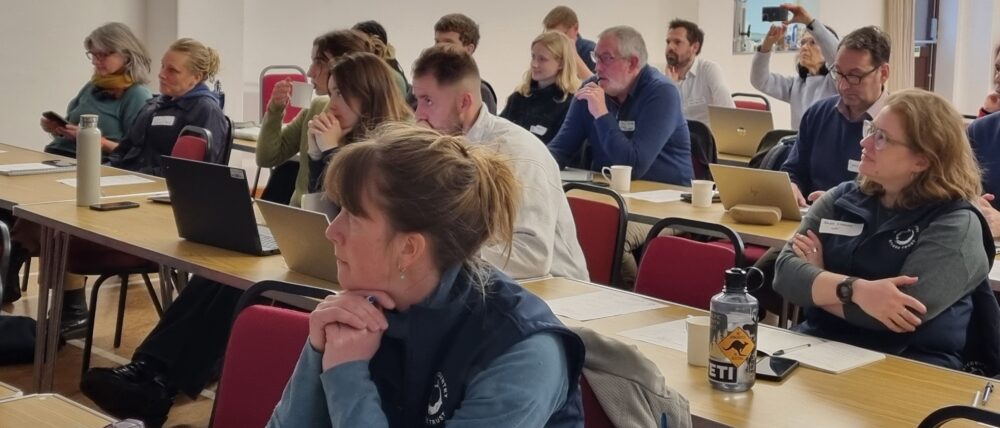
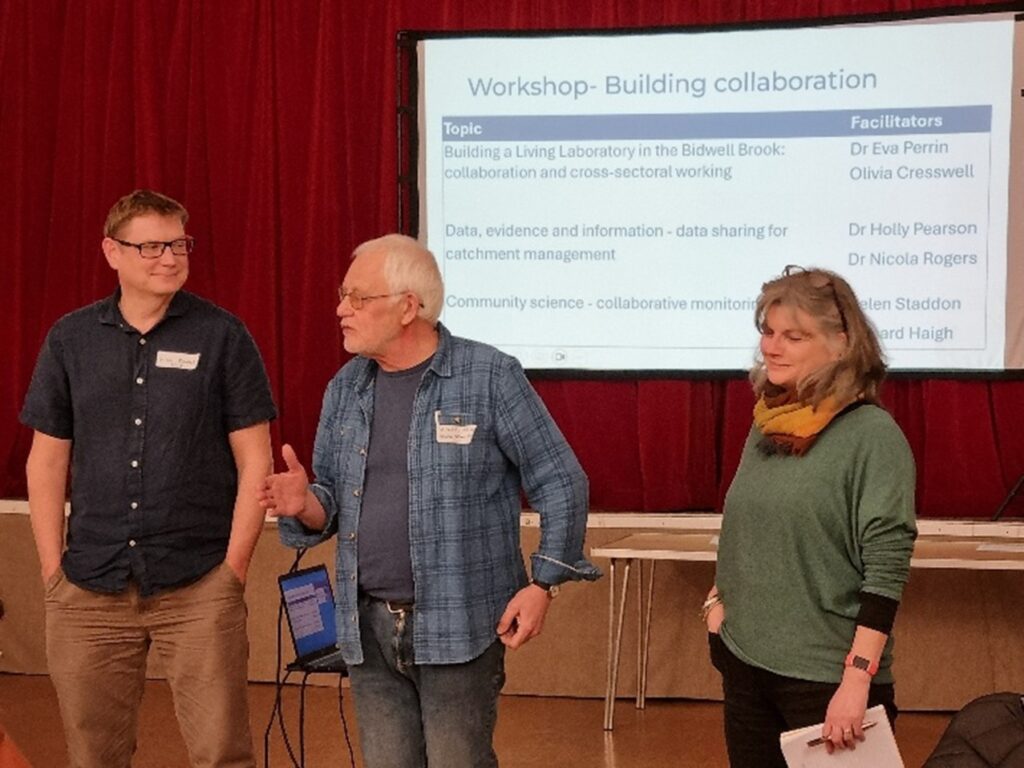
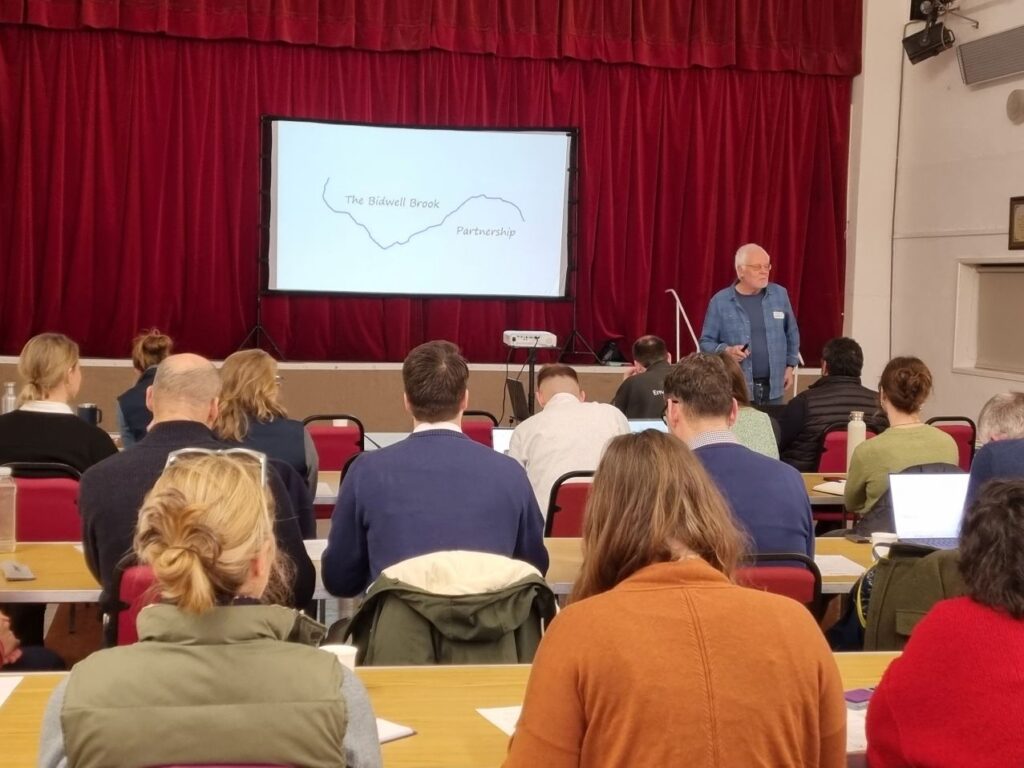
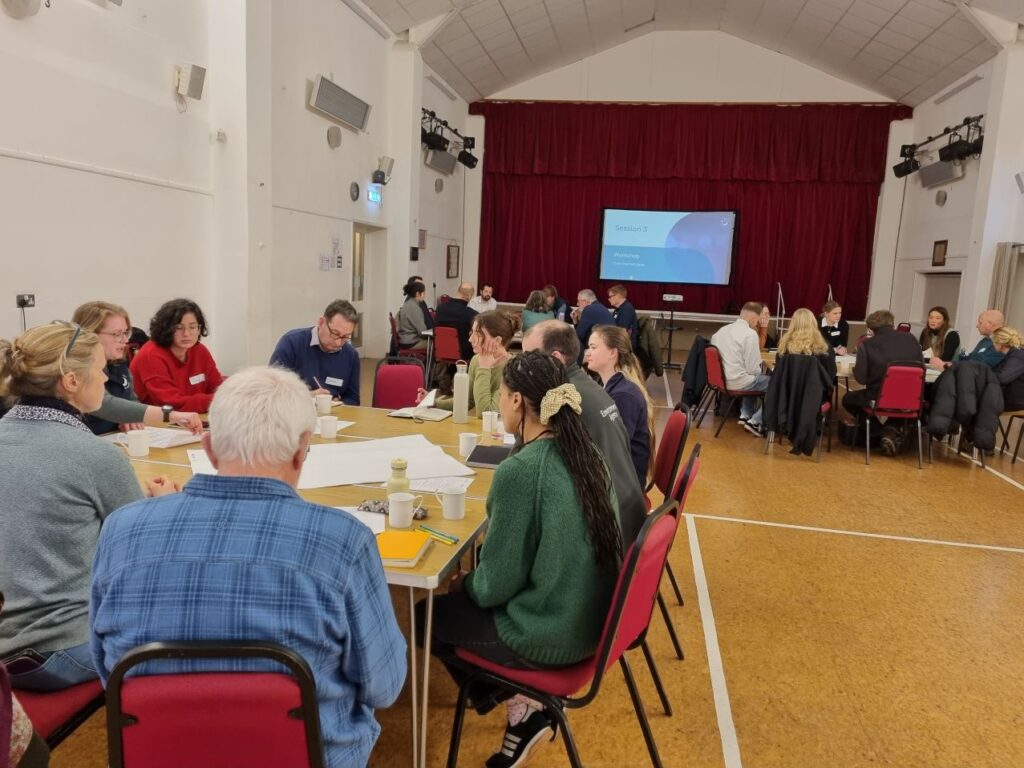
In January 2026 we were delighted to host a fantastic Research Symposium held in Rattery, bringing together around 35 people from various universities and organisations (including the Environment Agency) to talk all about the Bidwell Brook Living Laboratory.
You may already know about the Bidwell Brook Partnership, a local organisation bringing together local people and organisations to make the Bidwell Valley even better for both wildlife and for those of us who are lucky enough to live and work here (see https://bidwellbrook.org/). An important part of our activities has been working with various universities, with our team of ‘citizen scientists’. These are local people who are interested in helping in several different research projects, trialling new equipment/sensors etc.
The Symposium brought together the various researchers and organisations, so they could share information and findings, with the aim of the Bidwell Brook becoming a formally designated ‘Living Laboratory’. This would encourage further research, innovation and collaboration – as appropriate to local needs. We also talked about how to manage the mass of data becoming available and make it publicly accessible and understandable.
Local Involvement
Local people have already been involved in the research – big thanks to everyone who has helped so far. This year, there will be further opportunities, including workshops and more training for Citizen Scientists, with new research areas.
We will also be exploring some key questions, such as:
- What further research would be useful locally?
- Are you a local land/business owner who might like to find data/information to help you address a particular issue?
- Is there some monitoring equipment (that doesn’t already exist) that it would be useful for a University to (potentially) create?
We welcome all ideas – let us know at: info@bidwellbrook.org
Why the Bidwell?
Apparently, the UK is considered to be a leader in Europe in citizen science and community engagement, and the Bidwell Brook is playing an amazingly important role. Here are some highlights from the discussions at the Research Symposium:
- The Bidwell Brook is of national and potentially international significance, with an ambition for it to become a UNESCO Geohydrology Demonstration Site (University of Plymouth)
- The project in the Bidwell has helped validate the new Bactiquick equipment for use by Citizen Scientists everywhere (Uni. of Plymouth)
- The Bidwell Brook is an exemplar of catchment monitoring (West Country Rivers Trust)
- The Bidwell is very important to answer how Citizen Science can most usefully be used (Uni. of Exeter)
- Data from the Bidwell is being used to create a digital twin in Sweden & Poland (Chelsea Technologies/Uni. of West of England)
- Nature-based solutions to help control water are being trialled in a farm in Dartington (Westcountry Rivers Trust)
- Data from Dartington Combined Sewage Outlets (CSO) is being used in a project for South West Water to understand their discharge impacts (Uni. of Exeter)
It’s brilliant that we have so much really useful work going on locally. Most importantly: our main reason for involvement is to obtain high quality information that we can use to help improve our local environment. Ideally, this will also be useful as examples to help elsewhere, nationally and internationally. The BBP is also working with other organisations on other exciting developments, including: supporting local landowners on landscape recovery; education initiatives, particularly with young people; and improving the wildlife corridor along the Bidwell.
If you’d like to join in, in any way, we’d love to hear from you via info@bidwellbrook.org